 |
| Can you see the pavilion? |
 The preserve consists of 2911 acres on the Sabine River and is open from 7:00 a.m. to dusk every day. After you enter the gates and park, you will notice a covered pavilion, picnic tables and restroom area which is on top of the highest hill in the Preserve. This area, landscaped by the Wood County Master Gardeners, contains a sensory garden – one having plants that stimulate the senses. There is even a playground and a place to play horseshoes!
 |
| Steel truss bridge photo courtesy of Becky Sheridan |
A new aquatic loop and the Pullen Pond were built through contributions from Ozarka Brand Natural Spring Water, Texas Parks and Wildlife and local enthusiasts. A grant received by the city of Mineola was used to develop walking, hiking, biking and equestrian trails. A historic locally-constructed steel truss bridge has been added to the railroad walking
trail. Here canoes and kayaks can be launched onto the Sabine River. This area was at one time home to the Hasinai Tribe of the Caddo Indian Nation. Much of the preserve consists of pristine wetlands which are on the west side (on the east side of Highway 69).

 193 species of birds have been identified along with numerous butterflies and other creepy crawlies. Other critters include: opossums, bats, squirrels, voles, moles, shrews, gophers, armadillos, skunks, weasels, bobcat, cougar, rabbits, mice, rats, raccoon, otters, coyote, foxes, deer, feral hogs, beaver, nutria, longhorn and buffalo.
From the vantage point of the pavilion you can see the wildlife corridors (senderos),
created to draw the wildlife out into the open meadow to graze. This will be a
great place in the spring or fall to see and photograph birds on the wing as well as deer,
hogs, turkey, etc. A wonderful breeze was blowing and it was coolish.
 |
| Native Plant Area picture taken last spring |
 We started out on the paved path and followed it down toward
the beaver pond. Right off the bat we came upon two interesting things. The Wood County Master Gardeners have created a native plant and memorial garden and have labeled all the plants. There are even benches so you can sit a spell and take it all in. A little further down the path is a place to view bees working but the bees have been relocated.
We started out on the paved path and followed it down toward
the beaver pond. Right off the bat we came upon two interesting things. The Wood County Master Gardeners have created a native plant and memorial garden and have labeled all the plants. There are even benches so you can sit a spell and take it all in. A little further down the path is a place to view bees working but the bees have been relocated. 
The paved path
continued until it merged with an old railroad bed (built in the 1880's) that has been “paved” with
decomposed granite which makes a great walking trail. The crunch, crunch of our
footsteps did not drown out the birds or that other creepy noise we heard, which we determined was frogs. There are several boardwalks, hunting blinds and wildlife platforms built
out into the ponds so that wildlife and waterfowl can be viewed undetected.
 |
| Johnnie Bendy |
Many of the trails and ponds have names. Later I found out that these names came from Mrs. Johnnie Bendy a retired Mineola
educator who fished in the ponds and walked along the railroad track as a child. She is the primary resource for the preserve's
history. Many of the names such as Bridge Bob, Goggle Eyed Pond, White Perch
Hole and Turkey Island, all come from her childhood memories.
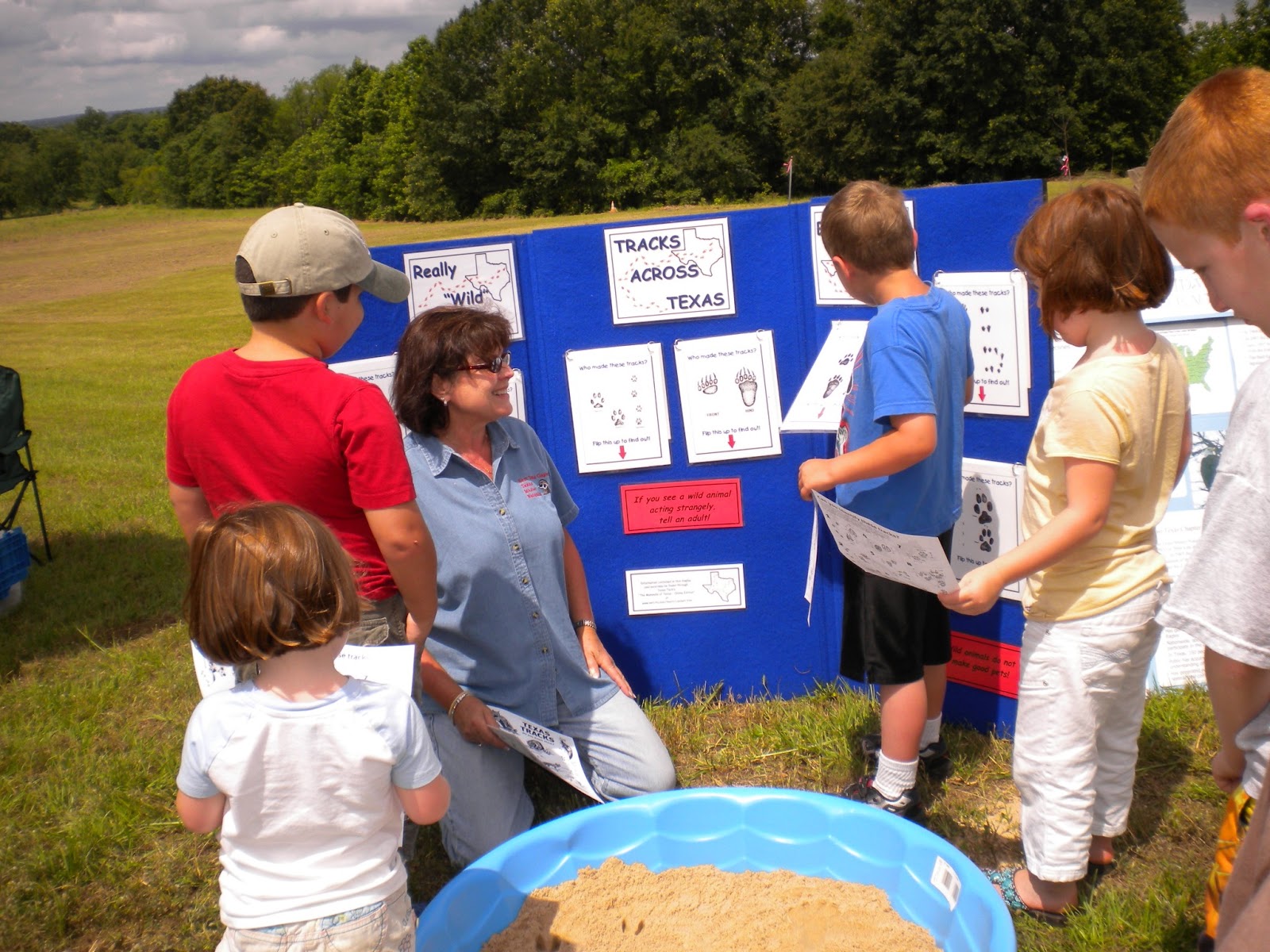 |
| Moi teaching animal tracking |
Since 2005, the preserve has been home NatureFest which is held in May. The event includes exciting exhibits, hikes and activities
including nature walks by Dr. Neil Ford of UT Tyler, The Creature Teacher, The
Turtle Lady, The Butterfly Guy, kids fishing and kite flying, nature photography, tree identification hike, face painting, build your own bird-house, frog loggin (frog identification), nighttime owl prowls, chuck wagon dinner, cowboy campfire, storytellers and a look at the
stars on Friday night with East Texas Astronomers. It is truly fun for the
whole family.
Check out the Mineola Nature Preserve – you, your
family, your children and grandchildren will have a grand time at this GEM!


