Showing posts with label gardening. Show all posts

Sunday, April 1, 2018

Ten Reasons You Should NOT Become a Gardener


1.     You buy plants. . .lots of plants. . .and put them in the ground only find that they don’t grow or grow prolifically. You repeat this cycle until one day it dawns on you, that you should do some research. This leads you to take classes and attend seminars.


2.  You sign up for said classes and learn about dirt soil, plant pests and diseases, soil PH, pruning, rainwater harvesting, straw bale and keyhole gardening. This leads to attending every seminar or class within a 90-mile radius of your garden. You are on a first name basis with your local agriculture extension agent. You are accused of stalking him.


3.     You learn about poop. . .cow, chicken and rabbit manure, bat guano, worm castings and frass.


4.     Every morning, you HAVE to go to your garden to inspect your plants for growth, blooms, and pests. This requires you to be out in the fresh air during good or bad weather. This also MAKES you listen to the birds singing.


5.     Your spouse notices your success or failure and decides he will garden too. . . without any knowledge of above referenced plants, soil, pests and poop. Said spouse becomes a know-it-all.


6.     Your grandchildren will want to “help” in the garden. This leads to dirty clothing, skinned knees and an occasional sighting of a bee or bug which then leads to grandchildren screeching at the top of their lungs. This screeching shatters the experience of quiet, peaceful gardening.


7.     The grandchildren will want to pick harvest the fruits of your labors. You will have to supervise because their mom may find out they eat fruit or veggies straight from the garden (without being washed of above referenced poop).


8.     Your success with vegetable gardening may lead to an abundance. This leads to making new friends and talking nice with the neighbors in order to pressure them into taking these unwanted vegetables. When friends and neighbors begin to run away from you when you come toward them with a grocery sack, this leads to depression.


9.     You still have an abundance from your garden. This now requires you to learn a new skill such as freezing, canning, and making herbal oils and vinegars. The neighbors and friends think you have retreated back to the 60s and become a reborn hippie.


10.  You acquire an entire new wardrobe.


Yes, I know I said 10 reasons NOT to grow a garden but I thought of one more!


11.  Growing fresh fruits and vegetables leads to the eating of more fresh fruits and vegetables. This leads to a lower consumption of other delicious foods such as baked goods, desserts, and bacon. Growing a garden leads to searching out others that “make their own” such as farmers markets. You get excited and think you can make your own butter and bread. You begin to think about acquiring chickens. This horrendous cycle of do-it-yourself begins to repeat itself.


Tuesday, January 16, 2018

The Enchanted Garden is Back!!


I'm back! Just a little hiatus from blogging. But, never fear The Enchanted Garden is here with bits of wisdom about gardening, nature and dumb stuff I do. Lets get right to it. Lets talk about feeding the birds.

In the winter, feeding the birds can be a matter of life and death for them. Natural food supplies such as insects and fruits are non-existent so setting out food for the birds provides the ticket to their survival.


If you have started feeding the birds, or if you are frustrated by a lack of success in attracting winter birds to your feeders, the first thing you need to do is determine whether you are feeding the right foods for the birds of the area. If you are not giving the birds what they want, you might not have many birds.


Here are the top ten foods for winter bird feeding:


·       Black-oiled Sunflower Seeds
·       Niger Thistle
·       Peanuts
·       Suet
·       Safflower
·       Cracked Corn
·       Fruit
·       Meal Worms (dead or alive)
·       Good Mixed Seed
·       Homemade treats


    Is there such a thing as BAD mixed seed? Heck ya! Bad mixed seed has lots of filler in it—junk seeds that most birds won’t eat. Bad mixed seed can include dyed seed meant for pet birds, wheat, and some forms of red milo. Good mixed seed has a large amount of sunflower seed, cracked corn and perhaps some peanut hearts or safflower. The really cheap bags of mixed seed sold at grocery stores can contain the least useful seeds. If you want to try different types of seed, may I suggest visiting Lost Creek in Mineola. Sandy Tibbs has a wide variety of seed just for the birds in our area and she is very knowledgeable!

If you are lazy like me, you can try one of my no fail methods. Smear peanut butter on a tree trunk, and poke some peanut bits into it. Try feeding suet and offer it all winter long. Suet attracts many insect-eating birds, such as woodpeckers. But nuthatches, juncos, chickadees, wrens, cardinals, sparrows and jays will also stop at backyard feeders for a high-fat treat. True suet, and especially the kind made with animal fat, provides a good source of energy and builds fat reserves needed during the cold.
Be sure to fill your feeders daily, preferable in the late afternoon to give the birds a boost before they roost at night. A few days of empty feeders means the birds will quickly disappear.

Place your feeders at varying heights and locations especially near trees and shrubs. Trees and shrubs provide protection from predators.

Provide a variety of foods.


Be sure to keep your feeders clean.

Now, lets talk gardening. I am happy to report that I am now taking Master Gardening classes. Hopefully the Enchanted Garden blog will take on more of a garden flavor but will keep nature posts too! We will see. Our first two classes are on soil. What? How long does it take to learn about dirt????


Ann Reynolds

Wednesday, November 16, 2016

Get to Know the Creatures in Your Yard

Have you ever just sat in your garden and looked at the world of the insects, bees, reptiles, birds and the plants? I mean, get down on their level and see the world as they see it. My favorite thing to do is to take a cup of coffee and go to the garden just as the sun comes up. The smell of the flowers and herbs is almost overwhelming. Last week I sat and watched, for the longest time, an Anole and his antics sparked my curiosity.

The Green Anole (Anolis carolinensis) is indigenous to the southern United States. With a dorsal coat of lime to emerald green (very rare and gorgeous specimens are tinted blue), the green Anole is an agile climber and dines on spiders, grasshoppers and other insect prey. These green guys are personable little lizards that seem to enjoy being hand-fed too. That is if you like picking up spiders and grasshoppers.


These little herps (slang for reptiles and amphibians) are also sometimes referred to as the American chameleon due to its ability to change color from several brown hues to bright green. However, it is not a true chameleon. The color changes are caused by hormones, background color or mood. Anoles also do push-ups to regulate their inner temperature. They are ectothermic which means their environment determines their body temperature. On a hot afternoon if you see a male Anole doing push-ups and there is no female around, chances are he is cooling off. Green Anoles tend to remain green when temperatures are more than 70 degrees F., whereas they tend to remain brown during cool weather conditions or when stressed.  And get this - its toes have adhesive pads to facilitate climbing.

This little green guy that I observed was doing push-ups all by himself. I was saddened. I’m sure you’ve seen them where you live.


 Video courtesy of Courtney Neumeyer

This behavior is to catch the female Anole’s eye. Which leads to this.


Females pay attention to this display of fitness, sort of like watching Chippendale Dancers (not that I have ever seen any Chippendale Dancers).

Female lizards rate their guys by the size of their. . . .wait for it. . .dewlap. It is the bright-colored patch that the male lizard sports on their necks or on their bellies. Doing these push-ups is much like a body builder flexing his muscles.


So once in a while forget your gardening to do list and slow down, rest, relax and discover the soap opera that goes on daily in your garden. You may not get ahead of those weeds, but you will find unexpected drama unfolding. A leisurely pace has its rewards!

Wednesday, August 17, 2016

Getting Caught Up in the Garden

You have seen it if you live at Holly Lake Ranch. That vine with the shiny green leaves, beautiful red or black berries, and thorns, prickles or spines (depending on species). Like you care if it is a prickle or thorn when the vine is stuck in the middle of your leg!! We are talking about Smilax or Greenbrier.

Run-in with Smilax


If you are curious, a prickle is a sharp outgrowth from the plant’s bark. A thorn is a modified stem. A spine is a sharp pointed modified leaf. Even more confusing is all true Greenbriers are Smilax but not all Smilax species are Greenbriers. Here is east Texas we are “blessed” with many species of Smilax but suffice it to say, we will call it Smilax.  

The red-berried Smilax (Smilax walteri) creeps over bushes at the edges of sandy swamps or near streams. It is a thin woody vine, which may be spiny or nearly spineless. Its leaf surfaces are shiny green and it bears red berries during the winter. It has long underground runners, but is not tuberous.


Walteri - photo courtesy of Benny Simpson's Texas Native Shrubs
Sarsaparilla Vine (Smilax pumila) can be found growing in the open sandy woods of east Texas. This weak, “unarmed” vine has few tendrils at the nodes and prefers to climb over low plants. The young leaves and stem are densely pubescent (having fine hairs), becoming lustrous and smooth as it ages. It, too, has red berries but in the spring.
 
Pumila - photo courtesy of Benny Simpson's Texas Native Shrubs
China-root smilax (Smilax tamnoides) likes the damp woods and low areas near creeks. It has knotty rhizomes, while the vine runs over bushes and climbs into trees using its tendrils. The lower part of the stem is covered with needle-like spines. The shiny leaves are of different shapes.
Tamnoides - photo courtesy of Benny Simpson's Texas Native Shrubs

There are other species of Smilax: laurifolia, bona nox, routunifolia, smallii, and glauca, lasioneura that grow in Texas. One species is enough for me!

The one redeeming quality of this plant is that parts are edible. **DO NOT EAT ANY PLANT UNLESS YOU ARE 100% SURE WHAT THE PLANT IS.** On Merriwether’s blog "Foraging Texas", he states that tender vines, tendrils, tubers, leaves and berries are edible. He even makes vegan jello shots from this plant. Here is his blog: http://www.foragingtexas.com/2008/08/greenbriar.html.

You may not want this vine in your garden or yard and are having trouble getting rid of it. No amount of cutting or spraying will do the trick. The problem is tubers! Digging out the tubers is the only way to do away with this leg-eating vine. But if you read Merriwether’s blog, the tubers are high in starch and edible. Wonder if I can substitute tubers for potatoes in my diet?


Tubers from one plant
Baby Smilax - photo courtesy of Sonnia Hill


So, if you are out working in the woods, be sure to wear leather gloves, long sleeves and jeans. Be sure to tell your family where you are. If you should go missing, they will know you are being held captive by the thorns, prickles, and spines of Smilax!

And, as always, things could be worse. . . . 


Ann Reynolds


Monday, February 22, 2016

Just Do One Thing!

My good friend, Liz the realtor, guilted me into the continuation of this blog about gardening, nature, the east Texas piney woods and dumb stuff I do. I think she just wants to read about the dumb stuff I do. If you enjoy my blog, please don't just like it on Facebook. Leave an anonymous comment at the bottom of this page. Heck, you can always say,"boy, Ann, that is dumb."

I want to talk about gardening for wildlife. I know, I know, we live in the middle of huge wildlife preserve here at Holly Lake Ranch. In talking about gardening for wildlife, I am not referring to planting so the deer will eat it (but actually that happens anyway). There is a type of gardening that sustains our wildlife and here are some ideas for attracting the kind of wildlife you really want in your garden.

Let’s start easy. . . . with just one thing. Imagine if doing just one thing for wildlife really could really make a difference in their existence. I know this sounds weird, but it’s true. We could make a huge difference for our local wildlife if each of us chose to do just one thing in our garden. Really.

You don’t have to re-landscape your flower beds. You don’t have to rip out your entire lawn (although doing that would be a great improvement for wildlife right there). You don’t have to become a native plant expert. You just have to choose one helpful task and do it. If we each did just that much, struggling wildlife populations would have a better chance.

One task could be to welcome bugs to your wildlife garden. Whaaat? Are insects good for the garden? The answer is yes. We tend to notice those that damage our plants and overlook the ones that are harmless or beneficial to the ecosystem that is our garden.


Worse yet, we use pesticide that kills all bugs because we paint all insects with the same brush. 

The fact is that many, probably most, insects are invaluable components of the ecosystem. You might want to consider organic gardening. Think of it this way – no bugs; no birds. It is wise to learn and recognize and appreciate these gardener friends. Here is a good resource published by Texas A&M. Beneficials in the Garden

Welcome pollinators and butterflies to your garden. Did you know there are more than 4,000 species of native bees and 725 species of butterflies on this continent? It takes 2 million flowers a bee has to tap to make a pound of honey and the estimated annual value of the honey bee to US agriculture is over $9 billion dollars. The honey bees are responsible for pollinating 1/3 of US crop species too. We need all kinds of bees even Bumbles and Mason! 


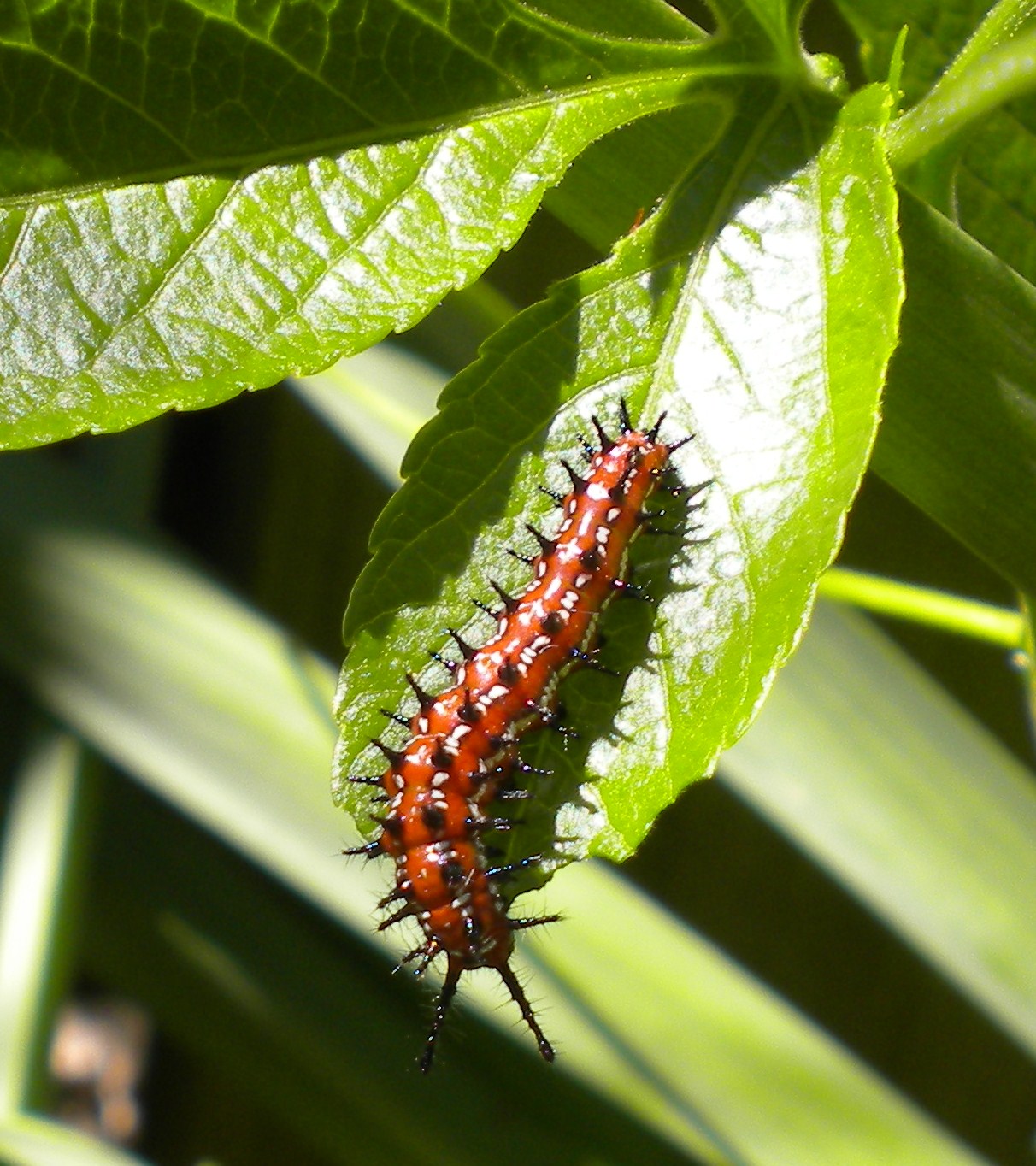
Consider planting the flowers they love, adding a water source and providing housing for them. Besides a hive, bees like upside down flower pots, old logs, or a board or two on the ground. Being a little untidy in the garden and on your property can be a big help. To make your butterfly garden successful,you need to supply both nectar and larval host plants. Nectar plants feed the adult butterflies and larval or host plants feed the caterpillars. Different species of butterflies have different needs, especially when it comes to the native butterfly host plants. Caterpillars are important. Without caterpillars, there are no butterflies. Well, duh!


Garden for the birds. I love birdscaping. It is one of the very few activities that truly follows the motto “If you build it, they will come.” By arranging your landscape or garden to create welcoming habitats for birds including rest stops for migrating birds, places for breeding and raising their young, and food and shelter for winter residents, you will provide for birds’ basic needs. Birdscaping is much more than putting up a few bird feeders.


Lastly, lead by example. Teaching your family, friends and neighbors to take the same action will magnify your efforts and help a lot more. Now I’m not saying there’s some kind of magic bullet that would solve all of the dangers facing our native wildlife, but doing one thing will certainly help to slow their decline.


Hey, I'm eating here!


Thursday, July 10, 2014

It Is All About Attraction

Gardeners are delighted to see "nature" visiting their gardens. If you want to invite more of these visitors to yours, try adding their favorite plants. As with all beneficial species, it is best to choose plants that are native or well adapted to our area.

Often gardeners lament for the lack of butterflies in their gardens. For butterflies, it is important to choose both larval host plants and nectar plants. The larval host plant is the plant a species prefer to lay their eggs on; the nectar plant is a food source. Most all species of butterflies prefer native plants on which to lay their eggs. Try: 
Question Mark

Cedar Elm


             for 


Purple Passionvine


Gulf Fritillary


             for


Milkweed


Monarch


                    for


For nectar, plant Coneflowers, Turk’s Cap and Lantana. 

Coneflower
Red Turk's Cap


Lantana
Lantana


Native plants to our area that provide both a host and nectar source are Flame Acanthus and Mexican Plum.

Flame Acanthus (deer do not eat this plant)

 Mexican Plum - a good alternative to Bradford Pear

The added bonus is that many plants, such as Flame Acanthus, Butterfly Weed and Lantana, that attract butterflies also attract hummingbirds. A two-fer if you will.

Other perennials to try are Obedient Plant (it is not obedient as my friend, Cecil, would say), Autumn Sage, Coral Honeysuckle and Red Yucca.


Obedient Plant
Autumn Sage


Red Yucca


Coral Honeysuckle


But why do butterflies and hummingbirds prefer native plants to other blooming non-natives? Native plants are part of an ecosystem of other plants that support birds, butterflies, and other wildlife. These plants and animals have lived together in communities for ages and they have adapted to live in balance. Native plants exist naturally in the area. 

So think twice when making a purchase of a plant that naturally grows in another part of the world. Chances are the native critters of your backyard won't like it. Kinda like me and sushi.

Garden on!