Saturday, January 4, 2014

NEW YEAR'S RESOLUTIONS


In 2012, Time magazine listed the top 10 New Year’s resolutions that were most often broken as:

1.  Lose weight and get fit
2.  Quit smoking
3.  Learn something new
4.  Eat healthier and diet
5.  Get out of debt/save money
6.  Spend more time with family
7.  Travel to new places
8.  Be less stressed
9.  Volunteer
10  Drink less

After reviewing this list (and being guilty of breaking one or two in the past), I decided not to set myself up for failure. Putting my thinking cap on, I have come up with my 10 New Year’s resolutions that if I follow to a ‘T’ I will have success. Plus my garden, the birds and other creatures living there will benefit.

  1. I will not plant vegetables or fruit-producing plants in the shade. Just seeing the sun from the area where the plant will go does not mean ‘sun.’ Most plants need at least 6 hours of FULL sun with vegetables needing 8-10.
  2. I will invest in good gardening tools and equipment. Selecting, investing in, and maintaining tools that are dependable can save much time, money, energy and frustration.
  3. I will not be deceived by weekend specials at the big box stores. Most of these ‘deals’ offer plants that bloom in the dark, grow 40’ in one year and eliminate household odors. They include grass that never needs mowing and plants that never need watering. Be wary fellow gardener!
  4. I will never plant more of ‘anything’ that I cannot maintain. Recognize your limitations (physical, mental, financial and time). Choose easy-to-care for plants that are tried and true performers in East Texas climate and soils.
  5. I will not believe in miracles. Miracles are too precious to be sold in little plastic bottles. Products with secret ingredients that ‘cannot’ be listed on the label are suspect. Keep plants healthy with periodic applications of the appropriate fertilizer. Healthy plants are less susceptible to disease and insects.
  6. I will be wary of sales. A dead plant is not a good deal. Sales are generally for dying plants, excess supplies of non-adapted plants or poor-quality plants.
  7. I will consider sources of information carefully. I will seek out sound gardening advice from authorities (local garden experts, extension agents and Cecil).
  8. I will not over-indulge my plants. Plants will not grow faster or bigger with kindness! Do not put twice the amount of fertilizer recommended,  water too often or spray with pesticides made double strength. Avoid the “if a little does some good, a lot will be better” philosophy.
  9. I will plant the right plant at the right time in the right spot. Don’t try to cheat by planting too soon. Trying to have the first tomatoes of the season among your friends will only damage your plants and reputation. Learn the requirement of each plant for your landscape (light, water, soil, extra care or protection, pruning, etc.).
  10. I will recognize my mistake(s) and take action. Make the right decision first to avoid suffering consequences for years. Don’t think you can take a regular crape myrtle and prune it to dwarf size because it blocks your window. Constantly pruning shrubs to fit a location can easily be remedied by replacing with appropriate sized varieties.


Now, see these resolutions will be easy to keep. And, most of these resolutions include the Time top 10 in some fashion as well. Except for the drinking - you must have a glass of wine in the garden now and then.
Garden on!


Friday, December 13, 2013

The Porch

I sit on my porch – in my favorite rocker – in the spring and watch the dogwood trees blooming in the forest below.


In summer, I sit there, a glass of iced tea in hand, watching the hummingbirds visit the feeder. In the fall, I arrange a variety of pumpkins and squash up the steps and beside the door. And in winter, glorious winter, you will find me wrapped in one of my grandmother’s quilts swinging in the porch swing.


This past week, when it wasn't raining, the dreary skies blocked the sun. Sometimes I feel discouraged. Even looking out the window at my garden is depressing – the flowers are gone, the plants are brown. I can feel winter creeping into my soul.

As I sit on the porch, I am reminded that nothing lasts forever. Winter, as dark and cold and rainy as it has been, will always be followed by spring and then summer.

Another view
The view from my porch


My front porch is my sanctuary. Sitting there, I am not bothered by the demand and pressures of everyday life. Trouble and stress seem to melt away.

Everyone needs a porch – a sanctuary – where rest and renewal can be found. 

Do you have a sanctuary? 


Wednesday, November 27, 2013

A Norman Rockwell Holiday

My family has never been guilty of trying to make the Thanksgiving or Christmas dinner a Norman Rockwell moment.  Has yours? 


What we are guilty of is serving the same food over and over again. Ours is always turkey, mashed potatoes, gravy, dressing (that no one eats except Granny the Great), cranberry sauce (canned chunky and jellied-for sandwiches the next day), green beans (Sissy insists on green bean casserole), fresh bread, pumpkin pie and Granny the Great’s pecan pie.

Another thing my family is famous for is names. No, not their given names but we name food and name dishes all based on the people who served them, what they served them in or the occasion.

I guess the most famous are the Jim Miller potatoes. My 93 year old mother (Granny the Great) talks about as a child going to a school chum’s (Jim Miller) house and his mother serving these potatoes. Nothing fancy – just good old home cooking. This dish is boiled lumpy potatoes (skin on or off your preference), with added butter, milk and chopped onion. Yes, keep them lumpy. All part of the mystique.


The company salad, well, it is the salad that is only served when company comes and over the years it has become a staple for Thanksgiving and Christmas. I tried to do away with it one year, because no one eats it, but the family asked where it was. So it has reappeared. It is just lemon Jello with chopped bananas and pineapple, topped with whipped cream made with the pineapple juice and then added shredded cheese.


Christmas morning debuts Grandma Betty’s waffles. It is the only time of the year that we have waffles – really. The Belgian-type waffle batter is made Christmas Eve as the kids are getting into bed. In the past we served these with venison sausage processed by Kuby’s in Dallas but my source disappeared. Sad. . . 

Then there is Juli’s mashed potato bowl. Our holiday dinner usually consists of 4 to 6 to 10 people - maybe more; maybe less. I always make a 10 lb. bag of mashed potatoes (not to be confused with Jim Miller potatoes). These are served in this antique McCoy bread bowl and usually there are no leftovers. What can I say; my family likes potatoes.


This enamelware pan is one used by my grandmother to take potato salad to church picnics. My mother always gestured by making a mountain with her hand to indicate how full the pan was. I just had to keep this pan – although unusable for potato salad or anything else for that matter.


My mother made her potatoes in this sauce pan. I will always remember her banging on the lid to secure it while the potatoes were cooking.


Lastly are the Christmas plates. My children made these while in day care – hence the spelling or lack thereof. Every year, the kids piled these plates high with waffles and sausage, turkey and gravy and pecan pie. Now my grandbabies are using these plates for Christmas dinner.


Although not Norman Rockwellish, our holiday dinners have been a source of tradition and memories from the time my mother was a child to now when her great grandchildren are being served dinner. We will be ever thankful for the love of family, wonderful memories and good food. As we prepare for Thanksgiving and Christmas, I wish you the bounty of God’s blessings. 


Thursday, November 14, 2013

Owl Eyes

Fellow blogger, Rebecca Deatsman, wrote a wonderful piece of her encounter with a Short-eared Owl at Grasslands National Park which is  a Canadian national park located in southern Saskatchewan.


Her essay is not so much a study of the Short-eared Owl but more about the way nature speaks to us. Click on the link below and enjoy!


Sunday, November 3, 2013

A Garden Give-away

Fellow Oklahoman and gardening blogger, Dee Nash, is having a fantastic give-away and I want you to check it out. Dee of Red Dirt Ramblings is giving away bulbs!! But don't just go to her blog for the freebies - check out all her gardens, her ideas, her suggestions, her resources. Much of what she has learned and applied to her gardens can be used down here in the piney woods of east Texas.

Here is the link. I know you will enjoy meeting Dee at Red Dirt Ramblings.

Wednesday, October 30, 2013

Mother Nature's Amethyst

Fall in the piney woods of east Texas, brings the colorful leaves of the Sweetgum and Sassafras trees
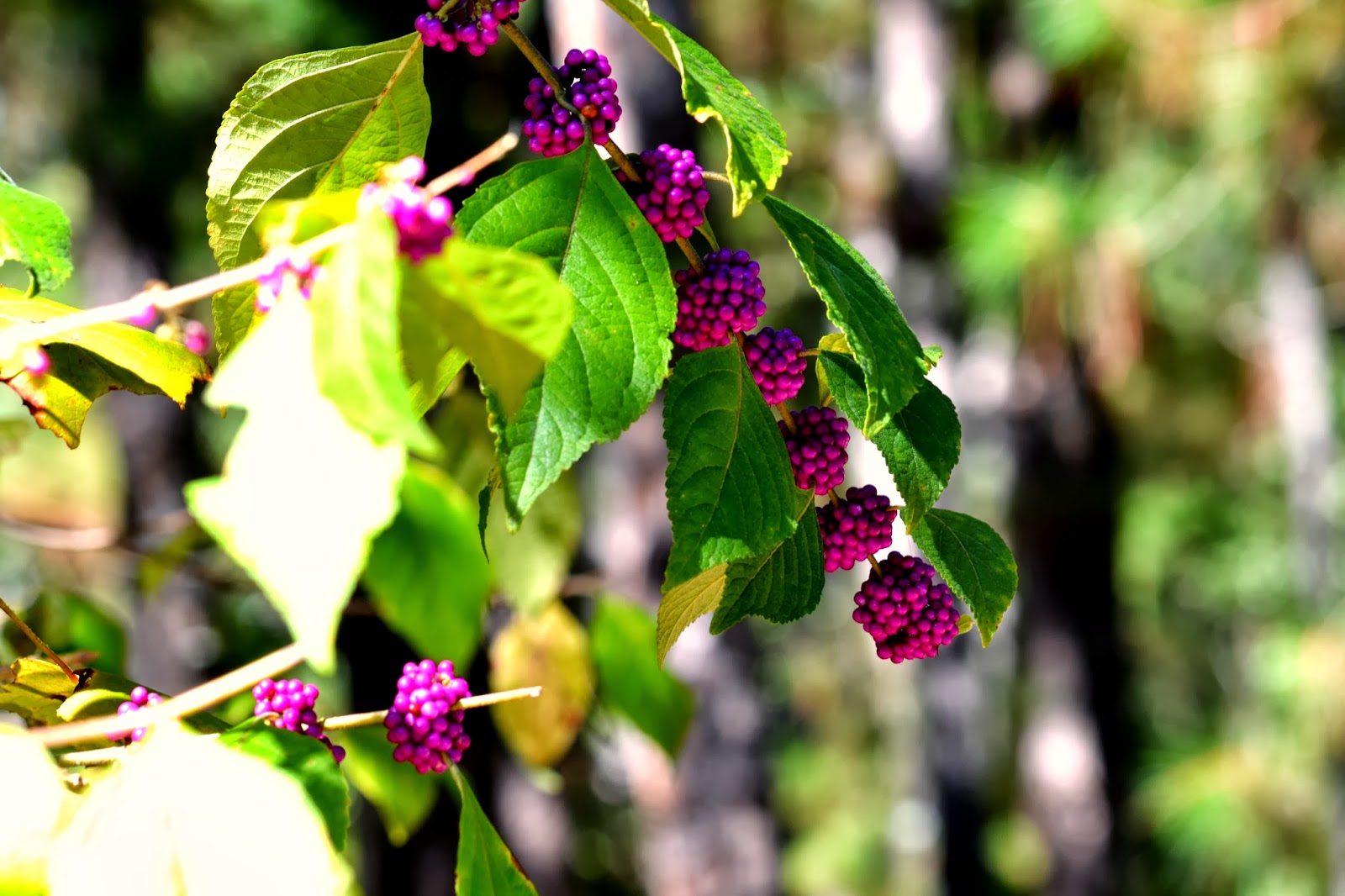
but nothing compares to the amethyst jewel-like berries of American Beautyberry (Callicarpa Americana). This plant also goes by the names French Mulberry, American Mulberry, Spanish Mulberry, Bermuda Mulberry, Sour-bush, Sow-berry.


East Texas, with its rich woods and thickets, provides the perfect growing conditions for this understory plant. It is best suited to semi-shade sites with moisture although it can tolerate full sun if given supplemental watering. And, as we have seen the last couple of years, it can tolerate some drought. It has long arching branches which can be pruned in half in the winter to create a more compact shrub. In summer, Beautyberry has small, greenish-white flowers but Mother Nature blesses this plant with clusters of deep purple berries in late summer and fall.  
Enjoy the berries. . .the seeds are favorites of our Robins and Cedar Waxwings – so much so that the berries will disappear in a matter of days. Birds do the propagating of this plant when they deposit the already ‘fertilized’ seeds. Other critters that enjoy the fruit are armadillos, raccoons, wood rats, foxes, opossums and deer.


American Beautyberry has long been used as a folk remedy to prevent mosquito bites. Old timers talk about crushing the leaves and putting them under the harnesses of their horses and mules to repel flies.
Native Americans used the Beautyberry as a diuretic, a cure for dropsy, dysentery and stomach aches, colic and for sweat baths for the treatment of malaria, rheumatism and fevers. The USDA Agriculture Research Service has patented the 4 chemicals in this plant as a mosquito repellent. However, the toxicity is still unknown. I have tried crushing the leaves and rubbing them on my legs to see if this works and it appears it does. One site I found recommended boiling the leaves, straining and combing the liquid with oil and rubbing it onto the skin. As always, do your own research before trying this.

American Beautyberry berries are edible when fully ripened but only in very small quantities. Again, do your research before sampling. Fully ripened, the berries will be dark purple or magenta but not wrinkled or dry. The berries are mealy and have a medicinal flavor so I don’t know why anyone would eat them. They can be made into a beautiful jelly and there are several recipes on the internet. The jelly tastes of rose petals and champagne. The berries can also be made into wine. Now we are talking!


If you have Beautyberry on your property, consider keeping this plant in your gardens not only for food for wildlife but for the fall eye-candy.

Garden on!

Sunday, October 20, 2013

Autumn Stroll Around the Ranch


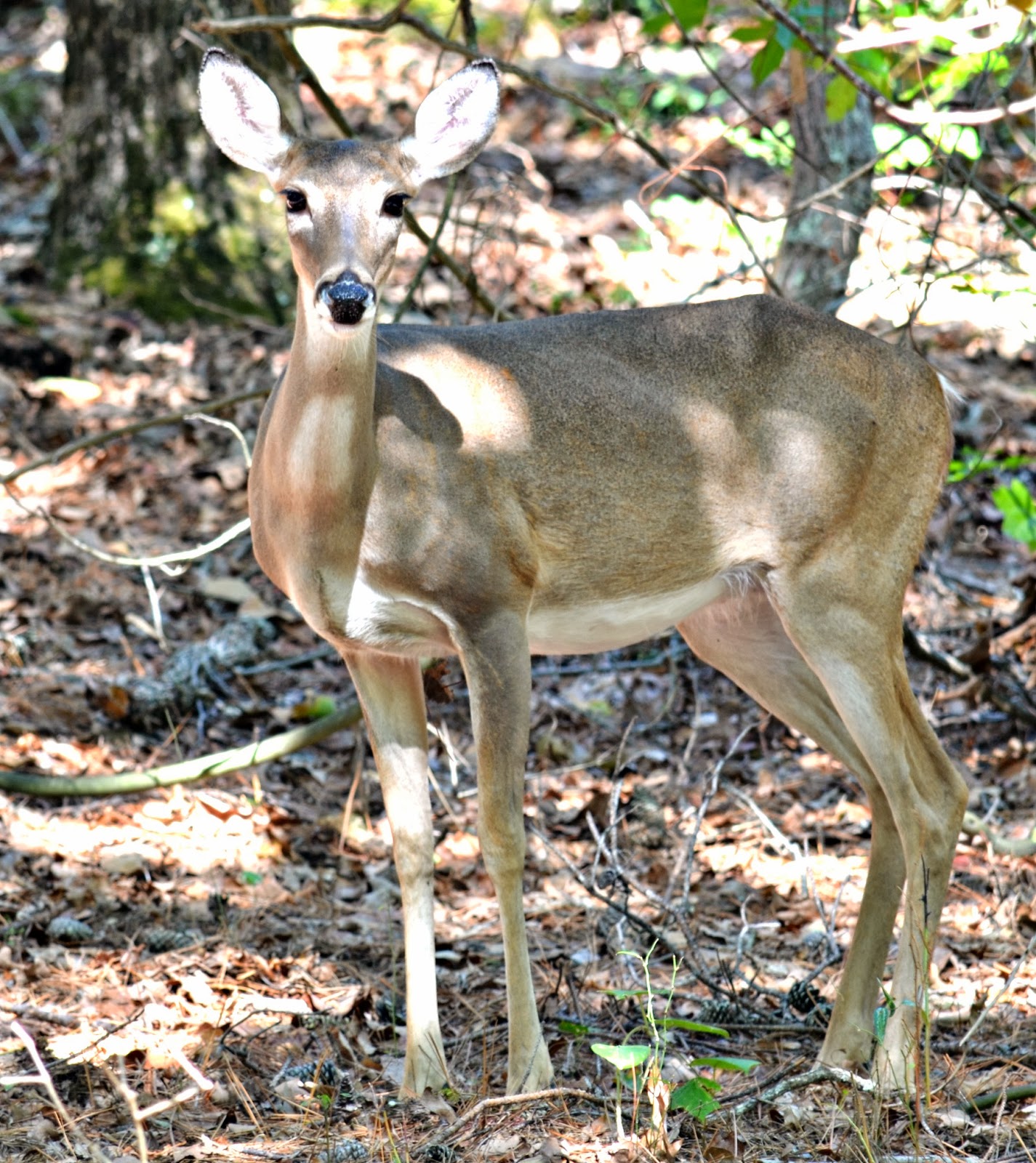
A little solitary time for this doe

Homeowners have begun decorating for the upcoming season


Last of the Poke berries

Even though scorched, this Sweetgum is showing its fall colors
The Sweetgums are one of the first trees to change colors here

A lush carpet of moss

Some creature's hidey hole

This dogwood has no leaves but is full of fruit


Art in nature


Even a log pile can be art

White Gayfeather (Liatris)

The oak leaves are beginning to change

Jack-o-lantern mushroom (Omphalotus olearius) - I think


American Beautyberry (Calicarpis americana)

The Yaupons have fruited

Resurrection Fern


Sassafras trees are unusual because they have three distinct 
leaf patterns on the same plant, unlobed oval, bilobed (mitten-shaped), and trilobed (three-pronged)
Colorful trilobed Sassafras leaves