Wednesday, February 29, 2012

Spring has sprung in the piney woods of east Texas

Little Sweetie
The many teeny tiny springy wildflowers have been in bloom for some time now, but it seems as if overnight the daffodils have popped. Nothing says spring more than the daffodil.

Daffodils belong to the genus Narcissus and are one of the most popular bulb flowers in any garden. The word "Narcissus" is derived from the Greek word narke, meaning numbness or stupor. Some attribute the naming of the flower to its narcotic fragrance while others debate that it is associated with the poisonous nature of the Narcissus bulbs. Daffodils have been recorded in history as early as the second century B.C.

Courtesy of Wikipedia
According to classical mythology, the young lad, Narcissus, was so enamored with himself that he stared at his reflection in a pool of water until he eventually turned into his namesake flower. And this is how Narcissus flowers came into being! I would like to say something here about men being enamored with themselves but that is not news!

Many homesteaders in the westward migration of the early United States felt that daffodils were an essential plant to have on the homestead. Many abandoned home sites can be recognized today by the clumps of daffodils growing in the fields.


We are blessed here in the piney woods of east Texas to have the species "Little Sweetie daffodil"(Narcissus jonquilla) that grows in abundance along our roadsides. These little yellow spring ephemerals with their unruly rush-like foliage are quite fragrant, deep yellow in color and have multiple florets to a stem.

In fact, along our State Highway 14 is a place known as Daffodil Hill showcasing thousands of these buttery yellow blooms.

Another little known daffodil paradise is Mrs. Lee's Daffodil Garden near Gladewater. Each spring Mrs. Lee's farm becomes a golden haven of beauty with millions of  daffodils in bloom throughout the 28 acres of farm land. These flowers are the offspring of the boxcar load of bulbs that Mrs. Lee purchased and had planted. For more information check out: http://www.daffodilgarden.com/daffodils_home.htm

So, I leave you with this one last photo and poem. The lovely daffodil is my favorite spring-time flower. What is yours?


When the winds of March are wakening the crocuses and crickets,
Did you ever find a fairy near some budding little thickets?
And when she sees you creeping up to get a closer peek,
She tumbles through the daffodils, a-playing hide and seek.
Marjorie Barrows


Wednesday, February 1, 2012

Great Backyard Bird Count to begin soon!

So, the Super Bowl is over, now what are you going to do? Do you have 15 minutes of free time and can you count up to 100?  If so, you can participate in the Great Backyard Bird Count. 

The 15th annual Great Backyard Bird Count (GBBC) will be held February 17-20, 2012. The event is hosted by the National Audubon Society, the Cornell Lab of Ornithology, Canadian partner Bird Studies Canada and sponsorship from Wild Birds Unlimited. Bird watchers of all ages count birds to create a real-time snapshot of where birds are across the continent. Anyone can participate, from beginning birder to experts. Last year, participants posted more than 92,000 checklists online, creating the continent’s largest instantaneous snapshot of bird populations ever recorded.
 
But why count birds? The results provide a snapshot of the whereabouts of more than 600 bird species and their movements. Think of it this way - no single scientist or team of scientists can document the complex distribution and movements of so many species in such a short time so why not use the general public? Some questions the count  answer are:
  •  How will this winter’s snow or the lack thereof, the cold or unseasonably warm temperatures influence bird populations? 
  • How will the timing of birds’ migrations compare with past years?
  • What kinds of differences in bird diversity are apparent in cities versus suburban, rural, and natural areas?
  •  Bird research is important to help maintain and restore habitats necessary to sustain healthy migratory and resident bird populations.
  •  Are any birds undergoing worrisome declines that point to the need for conservation attention?
Courtesy of Bird Source


To participate, just visit the GBBC web site at: http://www.birdsource.org/gbbc/. There you will find that you can count 15 minutes on one day, or you can count for as long as you like each day of the event. All the information and forms are located on the website. You can count in your backyard, travel to different locations or count with another group. If you plan to count in your backyard, be sure to have full feeders with a variety of foods to attract the most birds. You can also send photographs of the birds you see which will be included in the online gallery.

The GBBC website includes a wealth of information for novice and experienced birders. There is an online bird guide where you can browse 600 species for identification, photos, sounds and maps. There are tips to distinguish between those pesky similar-looking species. You can also access the Audubon Watch List, get help on choosing/using binoculars and feeding birds.

So what happens to all those numbers? Information collected goes into a database that shows trends and health of the birds over time. There are more than 36 million bird observations, which are used by scientists, in the Avian Knowledge Network database. There is also a map showing the location of all counts. The GBBC Summary page of the website has year by year counts dating back to 2005.


But what I love best is that you can see the count online as it progresses. Since results are reported on the website you can see the numbers almost immediately. It is free, easy and helps the birds. Oh, and, it is a lot of fun to be involved in the health of our planet!


Sunday, January 22, 2012

Springtime Flowers

Our weather here in Texas has been on again/off again with temperatures. Today it is 77 degrees, cloudy and windy. What I detest most about this time of year is the dreariness of it all. But today I found some color in my backyard.

This sweet little blue flower, commonly known as speedwell (Veronica arvensis) can be found throughout the US. It is native to Europe and is one of the earliest plants to bloom in the spring. The flowers are hermaphrodite (have both male and female organs).


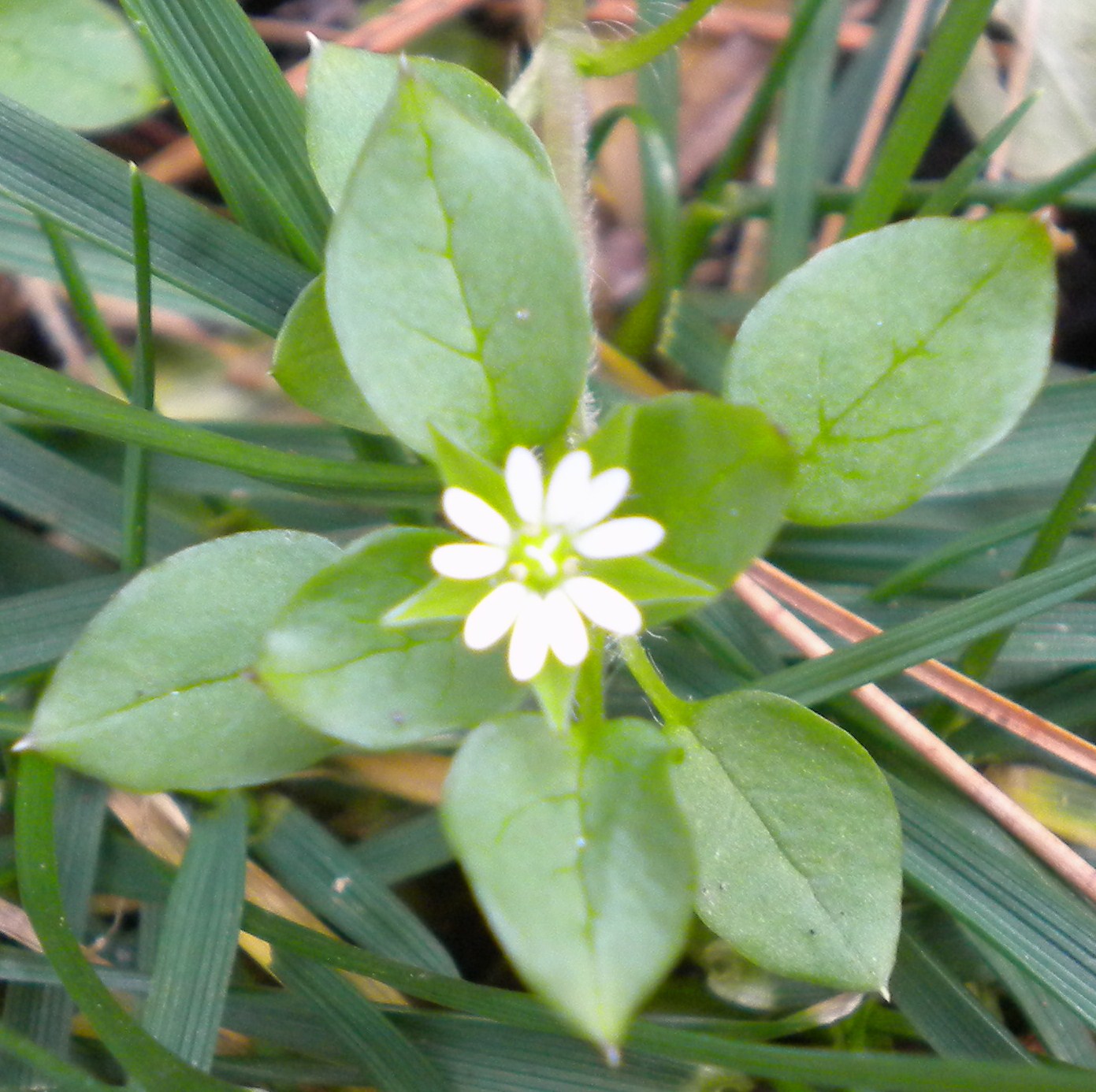
Common chickweed (Stellaria media) is also native to Europe and found throughout the US. The five petals (corolla) of this flower are deeply noticed so it looks as if there are 10 petals. The fruit sticks to clothing, hair and skin thus carried and deposited everywhere. The plant is one of the ingredients of a symbolic dish consumed in the Japanese spring-time festival, Nanakusa-no-sekku.


And then there is the common Dandelion (Taraxacum officinale). The deeply toothed leaves give the plant its name in Old French: Dent-de-lion means lion's tooth. Each flower head consists of hundreds of tiny ray flowers. Dandelion leaves are edible and should be collected in early spring, when they're the tastiest. Harvest again in late fall. Some people eat the greens from spring to fall, when they're very bitter. Others boil out the summer bitterness (and water-soluble vitamins) in two changes of water. I guess it is all a matter of preference. Flowers are edible or can be made into wine (now we’re talking).The modern French name for this plant is pissenlit (lit means bed). Ahem, the root and leaf tea act as a gentle diuretic.


So small but so pretty - I had to use an old glass ink well for my arrangement!


Monday, January 16, 2012

It's January . . .Let's Garden

I absolutely love the cold weather . . . . almost as much as the growing seasons. I can sit by the fire, hot cocoa in hand, perusing the gardening catalogs and dreaming of gardens abloom this summer. Do dreams come true? 

I have a couple of garden journals that I kept during last year. The first is just a note pad I made that I take into the garden for sketches and notes.  The second is one I got from Gooseberry Patch which includes helpful garden hints, whimsical garden plans, lots of handy pockets for seed packets and recipes fresh from the garden. 

The last is my favorite - Ladies in the Garden. It is a month to month growing guide for the organic garden. It is even signed by the author! The journals remind me of what works well and what needs to go. 


Holly contemplates the location of the iris
Now with leaves gone, I can see the “bare bones” of the garden.  So I make big plans. Sometimes, my plans are bigger than my back can handle.


I am wondering if my idea of a garden needs to change. Gardens aren’t all about color but also about texture, movement, light and dark. I am thinking of scoping out places for a fern dell and shade garden. Maybe a bog or rain garden. . .that is IF we ever get any rain in the spring and summer.

I have already planted the onions, broccoli and cabbage. Potatoes can go in next this month as well as transplants of cilantro and dill. My Bright Lights Swiss Chard adds wonderful color to a dismal area and is good to eat too!


Now is the time I must inventory the garden tools. It is time to sharpen garden shovels and hoes. All garden implements need to be checked to see if all are in working order, sharp and well-oiled. Do I need new gloves, hoses and loppers? Does the wheelbarrow tire need air?

So much to do and so little time. I must finish perusing the catalogs; order plants, check implements, plan the garden, dream of butterflies all the while singing, “Doing the garden, digging the weeds, who could ask for more? Will you still need me; will you still feed me, when I’m sixty-four?” The Beatles, 1967.

Well I guess I should get off my duff, put the hot cocoa aside and get to work.